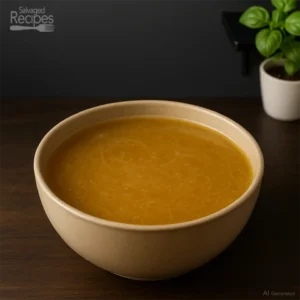
Chicken Stock is a fundamental culinary base that’s prized for its rich, savory flavor and versatility. This traditional method—popularized by chefs like Graham Kerr, builds deep flavor through simmering chicken parts with aromatic vegetables and herbs. The result is a golden, fragrant liquid used to create soups, sauces, gravies, and risottos. The slow simmering extracts collagen from the bones and sweetness from the vegetables, producing a silky texture and complex taste that elevates any dish. It’s a beloved staple for home cooks and professional kitchens alike, providing both nourishment and depth of flavor.
Ingredients
- 1 tsp olive oil
- ¼ tsp sesame seeds
- 1 cup onion
- 1 bay leaf
- ½ cup celery (chopped)
- ½ cup carrots (chopped)
- 1 sprig fresh thyme
- 1 sprig fresh parsley
- 2 cloves garlic (crushed)
- 6-12 peppercorns
- 3 lbs wings, back and legs of chicken
- 12 cups cold water

Instructions
Step 1: Prepare the Ingredients:
- Rinse the chicken parts under cold water to remove any residual blood or impurities.
- Chop the vegetables into large chunks; precision isn't necessary as they'll be strained out later.
Step 2: Sauté Aromatics:
- In the large stockpot, heat the olive oil over medium heat.
- Add the sesame seeds and toast them for about 1 minute until fragrant.
- Add the chopped onions, celery, and carrots. Sauté for 5–7 minutes until the onions become translucent.
Step 3: Add Chicken and Herbs:
- Place the rinsed chicken parts into the pot with the sautéed vegetables.
- Add the bay leaf, garlic, peppercorns, fresh thyme, and parsley.
Step 4: Add Water:
- Pour in the cold water, ensuring all ingredients are fully submerged.
- If necessary, add more water to cover the contents by about an inch.
Step 5: Initial Simmer:
- Bring the mixture to a gentle boil over medium-high heat.
- As it begins to boil, foam and impurities will rise to the surface. Skim these off with a ladle to ensure a clear stock.
Step 6: Reduce to Simmer:
- Once boiling, reduce the heat to low to maintain a gentle simmer.
- Partially cover the pot with a lid, leaving a slight gap for steam to escape.
- Allow the stock to simmer for 2 hours, skimming any additional foam or fat that rises to the top.
Step 7: Extended Simmer for Richer Flavor (Optional):
- For a more concentrated stock, continue simmering for an additional 2–4 hours, totaling up to 6 hours.
- This longer cooking time will extract more flavor and gelatin from the chicken bones.
Step 8: Strain the Stock:
- Carefully remove the large solids (chicken parts and vegetables) with tongs or a slotted spoon.
- Pour the remaining liquid through a fine-mesh strainer or cheesecloth into another pot or large bowl to remove smaller particles.
Step 9: Cool the Stock:
- Allow the strained stock to cool to room temperature.
- To expedite cooling, place the pot in an ice bath or divide the stock into smaller containers.
Step 10: Refrigerate and Skim Fat:
- Once cooled, refrigerate the stock overnight.
- The next day, a layer of fat will have solidified on the surface. Skim this off and discard or reserve for other cooking purposes.
Step 11: Store the Stock:
- Transfer the clarified stock into airtight containers.
- Refrigerate for up to 5 days or freeze for up to 6 months.
- For convenience, consider freezing in ice cube trays or 1-cup portions for easy use in recipes.
Tips
- Use leftover roasted chicken bones for added depth of flavor.
- Add a splash of white wine while deglazing the pot for extra richness.
- Include a piece of leek or parsnip for a slightly sweeter stock.
- Freeze in ice cube trays for convenient single-use portions.
- For a darker stock, roast the chicken parts and vegetables before simmering.
Transcription of the Original Recipe
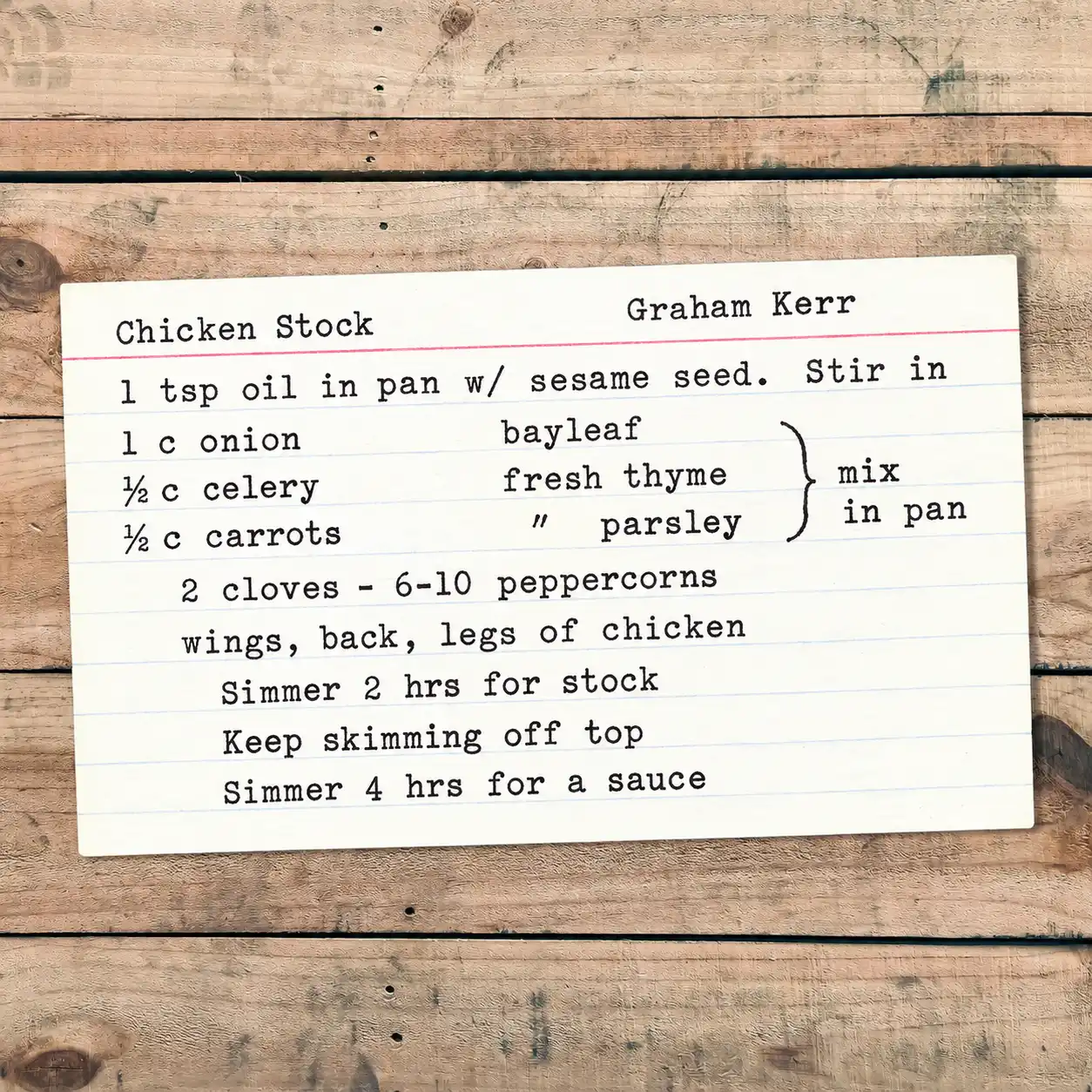
Read or copy the transcription
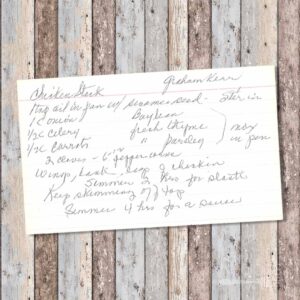
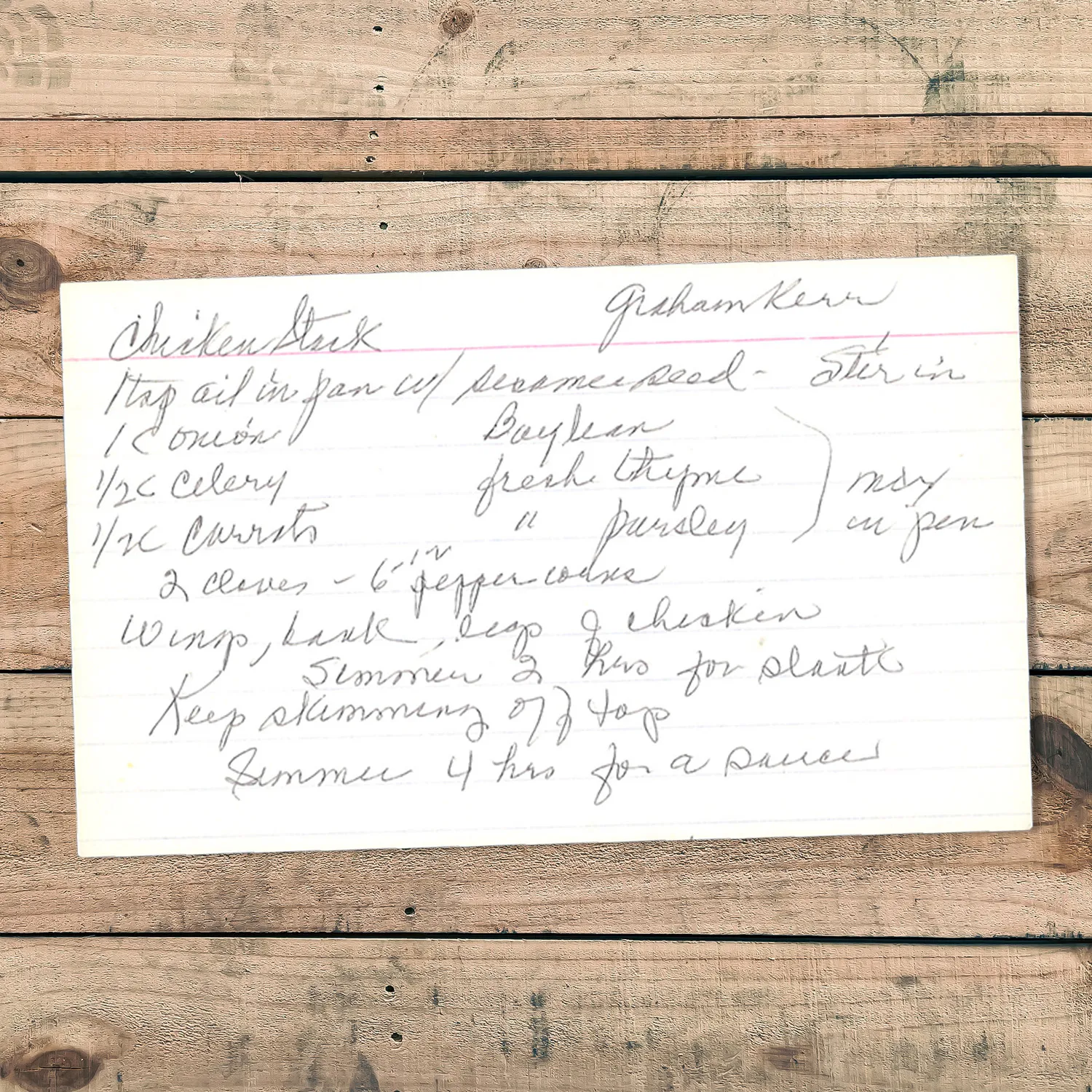
Chicken Stock                            Graham Kerr
1 tsp oil in pan w/ sesame seed. Stir in
1 c onion                               bayleaf
½ c celery                              fresh thyme   } mix
½ c carrots                             " parsley     in pan

2 cloves - 6-10 peppercorns
wings, back, legs of chicken
Simmer 2 hrs for stock
Keep skimming off top
Simmer 4 hrs for a sauce
From Transcription to Instructions
This recipe card gives you the bones, so we tried to make the order easier to follow at the stove. The card’s simmer instructions are brief, so we broke them into steps you can actually cook to: rinse the chicken, toast the sesame seeds and sauté the chopped veg, add the chicken and herbs, pour in cold water (the website specifies about 12 cups), bring to a boil, skim the foam, then lower to a gentle simmer and partially cover for 2 hours (or longer if you want a richer, more concentrated stock).
Nutrition
Serving: 1cupCalories: 45kcalCarbohydrates: 2gProtein: 6gFat: 1.5gSaturated Fat: 0.5gPolyunsaturated Fat: 0.3gMonounsaturated Fat: 0.5gCholesterol: 10mgSodium: 90mgPotassium: 150mgFiber: 0.5gSugar: 1gVitamin A: 1800IUVitamin C: 3mgCalcium: 20mgIron: 0.5mg